If you’re comparing plant-based omega 3 supplements, you’ve probably noticed how different the labels look and how hard it is to tell which ones are actually worth taking.
This 2026 review guide breaks down what plant-based omega 3 really means, how to compare products fairly, what matters most on labels, and how to choose an algae oil supplement that fits a vegan or vegetarian lifestyle without hype or medical claims.
Quick Answers
What is the best plant-based omega 3?
The best plant-based omega 3 supplements provide clearly labeled DHA and EPA from algae oil, use vegan capsules, and prioritize freshness and quality testing.
Is algae oil as good as fish oil?
Algae oil provides DHA and EPA directly, without fish, making it a good replacement for vegans and vegetarians.
Do vegans need omega 3 supplements?
Some do. While plant foods provide ALA, conversion to DHA and EPA can be limited and varies by individual.
What should you look for in vegan omega 3 reviews?
Check DHA/EPA amounts, algae source, capsule quality, and value per serving, not just total “omega 3.”
What Does “Plant-Based Omega 3” Actually Mean?
Most plant-based omega 3 supplements are made from algae oil.
That matters because:
-
Algae are the original source of DHA and EPA
-
Fish accumulate omega 3s by eating algae
-
Algae oil skips the fish entirely
This makes algae oil a direct, vegan-friendly source of long-chain omega 3s.
DHA vs EPA: What Matters Most?
When reviewing omega 3 supplements, ignore vague “total omega 3” numbers and look specifically for:
-
DHA (docosahexaenoic acid)
-
EPA (eicosapentaenoic acid)
Most algae-based supplements emphasize DHA, with smaller amounts of EPA. What matters most is that:
-
Amounts are clearly listed
-
You can compare products apples-to-apples
If a label doesn’t list DHA and EPA separately, it’s difficult to evaluate.
How to Compare Plant-Based Omega 3 Supplements (2026 Checklist)
1. DHA + EPA Amounts (Per Serving)
Look for a label that clearly states:
-
DHA per serving
-
EPA per serving
This is more meaningful than total capsule weight.
2. Algae Source & Transparency
High-quality brands clearly state:
-
That omega 3s come from algae oil
-
Basic sourcing or quality standards
-
No proprietary “mystery blends”
3. Freshness & Oxidation Awareness
Omega 3 oils are sensitive to oxidation.
While you won’t always see lab details on a label, responsible brands usually:
-
Emphasize freshness
-
Use protective packaging
-
Reference quality testing or standards
4. Capsule & Diet Compatibility
Check for:
-
Vegan capsules (no gelatin)
-
Allergen disclosures
-
Minimal fillers
This is especially important for people with food sensitivities.
5. Ease of Use (Consistency Wins)
Ask yourself:
-
How many capsules per day?
-
Any strong aftertaste?
-
Easy to take with meals?
The “best” omega 3 is the one you’ll take consistently.
6. Value: Cost per DHA/EPA (Not per Bottle)
To compare value fairly:
-
Divide price by combined DHA + EPA
-
Consider servings per bottle
-
Factor in subscriptions or bundles
Are Flax, Chia, and Walnuts Enough?
Plant foods like flaxseed, chia seeds, and walnuts provide ALA (alpha-linolenic acid).
The body can convert ALA into DHA and EPA but conversion rates are:
-
Low for many people
-
Highly variable
That’s why many vegans choose algae-based DHA/EPA instead of relying on conversion alone.
For more background, see:
Omega-3 guide
Omega-3 deficiency symptoms

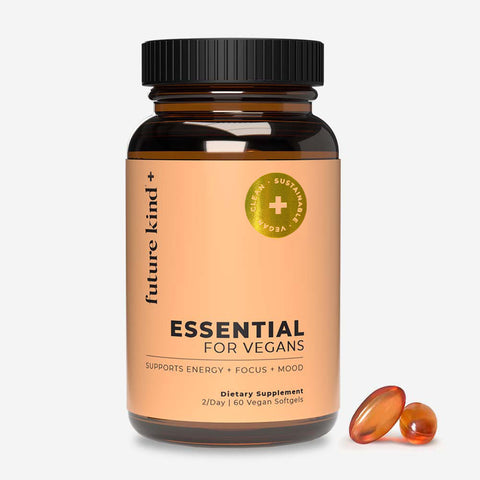
A Plant-Based Omega 3 Option (By Future Kind)
At Future Kind, we take a clarity-first approach to omega 3 supplementation.
Our Vegan Omega 3 is:
-
Made from algae oil (no fish)
-
Clearly labeled for DHA and EPA
-
Encapsulated in vegan capsules
-
Designed to pair easily with a plant-based routine
You can also explore it within our broader lineup here:
Best Vegan Supplements Collection
Frequently Asked Questions
Is algae oil omega 3 safe for long-term use?
Many people use algae-based omega-3 long term, but individual needs vary. A healthcare professional can provide personalized guidance.
Should omega 3 be taken with food?
Many people take omega 3 supplements with meals for comfort and consistency.
How much DHA and EPA do vegans need?
Needs vary by individual, diet, and life stage. Labels that clearly list amounts make informed choices easier.
Can you take omega 3 with a multivitamin?
Many people do. If you’re building a routine, see:
Vegan Multivitamin
Final Takeaway
The best plant-based omega 3 supplement in 2026 is one that’s:
-
Transparent about DHA and EPA
-
Sourced from algae, not fish
-
Easy to take consistently
-
Clear about quality standards
Reviews matter but knowing what to look for matters more.
FDA & Medical Disclaimer
This article is for informational purposes only and does not constitute medical advice. These statements have not been evaluated by the Food and Drug Administration. Dietary supplements are not intended to diagnose, treat, cure, or prevent any disease. Always consult a qualified healthcare professional before starting any supplement.