Shopping for a multivitamin with plant-based ingredients sounds simple until you start reading labels.
One product says “plant-based” on the front, but the vitamin D3 source is not clear. Another uses a long list of organic food blends, but you still have to check whether it includes direct DHA/EPA. A third looks minimal and modern, but may not cover the nutrients you actually care about.
Then there is the format question: capsule, liquid, gummy, tablet, powder, or softgel?
The best choice is not always the product with the longest ingredient list or the boldest front-label claims. A good plant-based multivitamin should fit your diet, life stage, bloodwork, and supplement routine.
This guide explains what to look for, what to ignore, how to think about plant based liquid multivitamin options, and which top-rated multivitamins with plant-based ingredients are worth comparing in 2026.
First, what does “plant-based ingredients” actually mean?
In supplements, “plant-based” usually means the product is designed for people who eat vegan, vegetarian, or mostly plant-based diets. It may use ingredients sourced from plants, algae, fermentation, or minerals rather than animal-derived ingredients.
But the phrase itself does not tell you everything.
A product can use some plant-based ingredients while still including ingredients that strict vegans may avoid. That is why the front label is only the starting point.
If you are aiming for a strictly vegan routine, common ingredients to watch out for and avoid include::
-
Gelatin, often used in capsules or softgels
-
Lanolin-derived vitamin D3, which comes from sheep’s wool
-
Fish-derived omega-3s, often listed as fish oil
-
Beeswax, sometimes used in softgels
-
Collagen, unless it is clearly described as a plant-based collagen booster
Third-party certifications can be helpful, but they are not the only way to evaluate whether a supplement aligns with vegan or plant-based preferences. In supplements especially, ingredient sourcing often provides more meaningful context than a logo alone. For example, algae-based DHA/EPA instead of fish oil or lichen-derived vitamin D3 instead of lanolin-derived D3 are formulation choices many plant-based consumers specifically look for.
A practical approach is to review the ingredient sources, capsule materials, omega-3 source, vitamin D source, added excipients, and overall company transparency rather than relying on a certification badge alone.
What makes a plant-based multivitamin worth considering?
A plant-based multivitamin should do more than look natural.
The best formulas usually have five things in common:
-
They address realistic nutrient gaps. For plant-based eaters, that often means nutrients like B12, D3, omega-3 DHA/EPA, iodine, zinc, magnesium, K2, and selenium.
-
They use clear nutrient forms. You should be able to tell what kind of B12, D3, zinc, magnesium, and omega-3 the product uses.
-
They avoid obvious animal-derived ingredients. This matters especially for capsule material, D3 source, and omega-3 source.
-
They explain testing and quality clearly. Third-party testing can help screen for contaminants and support product safety when results are provided.
-
They match your life stage. A standard multivitamin is not the same as a prenatal, iron supplement, calcium supplement, or full B complex.
A shorter formula can be better than a long one if it covers the right things. More ingredients do not automatically mean more value.
Nutrient forms that are worth understanding
Vitamin B12: form matters, but dose and consistency matter too
You may see strong claims that one form of B12 is always better than another. The real answer is more practical.
Methylcobalamin and adenosylcobalamin are active forms of B12. Cyanocobalamin is also commonly used and can be effective, although it requires conversion. All three can help support B12 levels when dosed properly.
For plant-based eaters, the first priority is getting a reliable B12 source in a meaningful dose. B12 is not reliably found in unfortified plant foods, so fortified foods or supplements are important.
Helpful internal links:
Vitamin D3: check the source
Vitamin D supports bone health, immune function, and overall wellness. Your body can make vitamin D from sunlight, but that depends on your location, the season, skin tone, age, sunscreen use, and how much time you spend outside.
D3 is generally preferred over D2 for maintaining vitamin D levels. For a vegan-friendly formula, look for D3 sourced from lichen rather than lanolin.
One important note: lichen-derived D3 is not unique to one brand. Competitors may use it too. The better question is whether the product clearly identifies the D3 source and provides a dose that fits your routine.
Omega-3 DHA/EPA: algae is the direct plant-based source
Flax, chia, hemp seeds, and walnuts provide ALA, a plant-based omega-3 fat. These foods are valuable and worth keeping in the diet.
But ALA does not reliably replace direct DHA/EPA for everyone. DHA and EPA are long-chain omega-3s commonly discussed for brain and heart health support, and algae oil is the direct plant-based source.
Many multivitamins do not include meaningful DHA/EPA, which makes omega-3 inclusion worth checking. If your multivitamin does not include algae-derived DHA/EPA, a dedicated vegan omega-3 supplement may be worth considering.
Iodine: useful if your intake is inconsistent
Iodine supports normal thyroid function. Plant-based eaters may want to pay attention to iodine if they do not use iodized salt, eat seaweed, or consume other reliable iodine sources.
This does not mean every plant-based eater is low in iodine. It means intake can be inconsistent depending on your habits.
Helpful internal link: Best Iodine Sources
Zinc: avoid exaggerated claims
Zinc supports immune function, wound healing, and normal cellular processes. Plant-based eaters may need to pay attention to zinc because phytates in legumes, grains, nuts, and seeds can reduce absorption.
Chelated forms such as zinc bisglycinate or zinc picolinate are often chosen for absorption. Zinc oxide is commonly used and still provides zinc, although other forms may be preferred in some formulas.
Avoid blanket statements like “zinc oxide is always bad.” Also avoid formulas that imply zinc will boost testosterone above normal levels. Correcting a zinc deficiency may support normal hormone levels, but extra zinc does not raise testosterone above normal in people who already have adequate zinc.
Magnesium: form can affect tolerance
Magnesium is often discussed for sleep quality, muscle function, nerve function, and recovery.
Forms like glycinate, citrate, or bisglycinate are often chosen in standalone supplements for different absorption or tolerance considerations. Magnesium oxide is common in multivitamins because it is compact and practical in formula design, so it should not be dismissed automatically.
If you want more targeted magnesium support, a dedicated vegan magnesium supplement may make more sense than relying only on a multivitamin.
Folate: pregnancy changes the conversation
Folate is important for cell division and red blood cell formation. It becomes especially important for people who are trying to conceive or could become pregnant.
Folic acid has the strongest evidence for neural tube defect prevention. Methylfolate is a biologically active form that can raise folate levels and is used in many modern formulas, but it should not be described as proven superior for neural tube defect prevention.
If you are pregnant, breastfeeding, trying to conceive, or could become pregnant, use a dedicated vegan prenatal vitamin and review your routine with a qualified healthcare professional.
Iron and calcium: not every multi needs them
Iron and calcium are both important nutrients, but they do not belong in every multivitamin.
Iron needs vary by sex, menstruation, pregnancy, diet, and bloodwork. Many men and postmenopausal women should not add iron without a reason. If your ferritin is low or you have heavy periods, a dedicated Iron + Vitamin C supplement may allow more targeted dosing.
Calcium is bulky and can compete mainly with iron, and potentially with zinc and magnesium, for absorption. If your calcium intake is low, a dedicated vegan calcium supplement taken separately may make more sense.
Bloodwork beats guessing.
Capsule, tablet, liquid, or gummy: which format is best?
There is no single best format for everyone. What matters is nutrient form, dose, sugar content, stability, convenience, and whether the format helps you take the supplement consistently.
Capsules
Capsules are common for plant-based multivitamins because they are simple, portable, and can be made with plant cellulose instead of gelatin.
They can be a good fit if you want a precise serving size, minimal flavoring, and a straightforward daily routine. The trade-off is that some people dislike swallowing capsules, especially if the serving size is two or more per day.
Tablets
Tablets can fit a lot of nutrients into a compact serving and may be more shelf-stable than some liquid formulas.
The trade-off is that tablets can be harder to swallow for some people, and they may require excipients or binders to hold their shape. Those are not automatically bad, but they should be evaluated based on the full ingredient list.
Plant-based liquid multivitamins
A plant-based liquid multivitamin may be a good option for people who struggle with capsules or tablets.
Liquid formulas can be easier to swallow, easier to adjust by serving size, and more appealing for people with pill fatigue. They may be especially useful for older adults, children when age-appropriate, or people who have difficulty swallowing pills.
The trade-offs are worth considering. Liquid multivitamins may need flavoring, sweeteners, preservatives, or stabilizers to taste good and stay shelf-stable. Some nutrients may be less stable in liquid form after opening, depending on the formula and storage instructions.
Liquid does not automatically mean better absorption. A well-formulated capsule can still be a strong choice.
Gummies
Gummies can be effective when properly formulated. The format itself does not make a gummy less effective. What matters is nutrient form, dose, sugar content, and formulation quality.
Gummies can support consistency because they are easy and enjoyable to take. B12 and melatonin are especially well suited to gummies because chewing can support partial sublingual absorption.
The trade-off is that some nutrients are harder to formulate as gummies. Calcium and iron, for example, usually require larger doses. Gummies may also include added sugar or sugar alcohols, so it is worth reading the full label.
Red flags to watch for on a plant-based multivitamin label
Here are a few warning signs for identifying products that may warrant a closer look at the supplement facts.
|
Red flag |
Why it matters |
|
Capsule or softgel material is not clearly identified |
Some capsules and softgels are made with gelatin, which is animal derived. Vegan consumers should verify the source. |
|
No vitamin D3 source listed |
Vitamin D3 can come from lanolin (sheep's wool) or lichen. If a product does not specify the source, vegan shoppers may want to investigate further. |
|
Fish oil as the omega-3 source |
Fish oil is not vegan. Algae oil provides DHA and EPA directly from the original source in the marine food chain and is suitable for plant-based diets. |
|
Vitamin B12 form is not disclosed |
Quality supplements typically identify the form of B12 used, allowing consumers to make informed choices. |
|
Proprietary blends that hide key nutrient amounts |
Transparency matters. You should be able to see the amounts of essential vitamins, minerals, and other active ingredients. |
|
Testing claims lack supporting details |
When a product highlights testing, certifications, or quality standards, look for supporting details that explain how those claims are verified. |
|
Iron included by default |
Iron may be useful for some people but unnecessary for others |
|
Calcium squeezed into a multi at tiny amounts |
Calcium requires significant space in a formula. Trace amounts may contribute little to overall intake and may be included primarily for label appeal. |
|
Aggressive health promises |
Be cautious of products that claim to cure, treat, prevent disease, or guarantee specific outcomes. Reputable supplements avoid these promises. |
A proprietary blend is not always bad. It is less concerning when used for non-essential add-ons, such as fruit and vegetable blends, as long as the main vitamin and mineral dosages are clearly listed.
Our top picks for multivitamins with plant-based ingredients in 2026
1. Future Kind Foundations — Best focused plant-based multivitamin
Future Kind Foundations is a broader daily multivitamin designed for plant-based eaters who want more coverage than Future Kind Essential, without a 40-ingredient “kitchen sink” approach.
It includes eight nutrients commonly discussed in plant-based nutrition:
-
Vitamin B12
-
Vitamin D3
-
Omega-3 DHA/EPA
-
Vitamin K2
-
Iodine
-
Zinc
-
Magnesium
-
Selenium
What we like:
Future Kind Foundations includes algae-derived omega-3 DHA/EPA, which is uncommon in many multivitamins. It also includes D3 described as plant-lichen derived, plus iodine, zinc, magnesium, K2, and selenium.
It is a good fit for people who want targeted coverage for common plant-based nutrient gaps rather than a very large formula.
The current product page includes a third-party testing section. Testing helps screen for contaminants and supports product safety, but the product page is the best place to check current testing information.
Worth noting:
Future Kind Foundations does not include iron, calcium, folate, or a full B complex. It is not a prenatal.
If you need iron or calcium, a dedicated supplement may be a better fit. If you are pregnant or trying to conceive, use a dedicated prenatal rather than a standard multivitamin.
Best for:
Plant-based eaters who want focused daily coverage for B12, D3, omega-3 DHA/EPA, iodine, zinc, magnesium, K2, and selenium.
Not ideal for:
People who need iron, calcium, folate, a full B complex, or pregnancy-specific nutrition.
CTA: Explore Future Kind Foundations
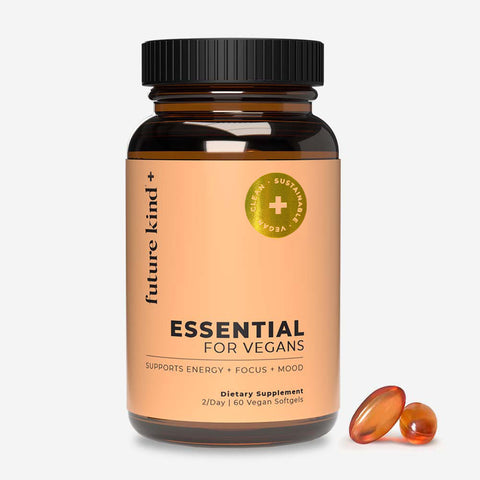
2. Future Kind Essential for Vegans — Best simple essentials option
Future Kind Essential for Vegans is the original, simpler Future Kind multivitamin.
It focuses on three foundational nutrients for plant-based eaters:
-
Vitamin B12
-
Vitamin D3
-
Omega-3 DHA/EPA
What we like:
Future Kind Essential may be a good fit if you want the core vegan nutrients without a broader multivitamin. It is simpler than Future Kind Foundations and easier to understand if you only want B12, D3, and omega-3 support.
Worth noting:
Essential is not the same as Foundations. It does not provide the broader Future Kind Foundations nutrient set of iodine, magnesium, K2, selenium, and zinc unless the current product label says otherwise.
Best for:
People who want a simple plant-based supplement routine focused on B12, D3, and omega-3.
Not ideal for:
People who want broader multivitamin coverage for iodine, zinc, magnesium, K2, and selenium.
3. Garden of Life Organics — Best organic whole-food-style option
Garden of Life Organics is a broad product line built around organic, whole-food-style vitamins and minerals. The brand’s Organics page highlights USDA organic certification and Non-GMO Project Verification, gluten-free and vegan.
What we like:
Garden of Life stands out for its commitment to organic certification and appeals to consumers seeking a whole-food-based supplement approach.
Worth noting:
The Organics line includes a variety of products with different nutrient profiles, serving sizes, and ingredient forms. Depending on the specific formula, important nutrients such as omega-3 DHA and EPA, vitamin B12, iodine, choline, or vitamin D may not be included in amounts that fully support the needs of people following plant-based diets.
Organic certification is valuable, but it does not necessarily indicate whether a formula addresses the nutrients most commonly under-consumed on vegan and vegetarian diets. For that reason, it's worth looking beyond organic claims and evaluating the overall nutrient profile, ingredient forms, and whether key nutrients are included at meaningful levels.
Best for:
People who prioritize organic certification and whole-food-style formulas.
Not ideal for:
People seeking a more comprehensive plant-based multivitamin that combines essential vitamins, minerals, and algae-based omega-3 DHA and EPA in a single daily formula.
4. Ritual Essential Multivitamin — Best transparent minimalist option
Ritual's Essential multivitamin line takes a streamlined approach to supplementation, focusing on a select group of nutrients rather than a comprehensive vitamin and mineral profile. The formula includes key nutrients such as vitamin D3, vitamin B12, omega-3 DHA from microalgae, and folate in a delayed-release capsule.
What we like:
Ritual is known for its simple ingredient list, transparent sourcing information, and easy-to-follow approach to supplementation. It may appeal to people who prefer a minimalist routine and want to focus on a handful of core nutrients.
Worth noting:
Ritual intentionally includes fewer vitamins and minerals than many traditional multivitamins. While this can be a benefit for those seeking a simplified formula, it may leave gaps for individuals looking for more comprehensive nutritional support in a single product.
People following plant-based diets often benefit from paying close attention to nutrients such as vitamin B12, vitamin D, iodine, omega-3s, choline, and other essential vitamins and minerals. Depending on individual needs, a broader-spectrum formula may provide more complete coverage and reduce the need for additional supplements.
If you are pregnant, trying to conceive, or breastfeeding, consider a dedicated prenatal formula designed specifically for those stages of life.
Best for:
People who prefer a minimalist supplement routine and a focused nutrient profile.
Not ideal for:
People looking for broader nutritional coverage and more comprehensive plant-based support in a single daily supplement.
5. DEVA Vegan Multivitamin & Mineral Iron-Free — Best budget-friendly vegan option
DEVA Vegan Multivitamin & Mineral Iron-Free is an affordable daily multivitamin designed for vegans and vegetarians. The formula provides a broad range of vitamins and minerals while avoiding animal-derived ingredients and iron.
What we like:
DEVA is one of the more budget-friendly vegan multivitamins available and offers broad nutritional coverage at an accessible price point. It may be a practical choice for those looking for a straightforward, no-frills vegan multivitamin.
Worth noting:
Affordability often requires tradeoffs. The iron-free formula uses vitamin D2 rather than vitamin D3, which some consumers prefer because D3 is generally considered more effective at raising and maintaining vitamin D levels.
The formula also focuses primarily on essential vitamins and minerals and does not include certain nutrients commonly emphasized in plant-based nutrition, such as algae-derived omega-3 DHA and EPA. Depending on your diet and health goals, you may need additional supplements to achieve more comprehensive nutrient coverage.
As with any multivitamin, it's worth reviewing the supplement facts panel carefully to ensure the nutrient forms and amounts align with your individual needs.
Best for:
People seeking an affordable vegan multivitamin that provides broad nutritional support.
Not ideal for:
People looking for premium ingredient forms, algae-based omega-3s, or a more comprehensive all-in-one approach to plant-based nutrition.
Buyer’s checklist: how to choose the right plant-based multivitamin
Use this checklist before buying:
|
What to check |
Why it matters |
|
B12 source and dose |
B12 is one of the most important nutrients for plant-based eaters |
|
D3 source |
Lichen-derived D3 is the vegan-friendly option to look for |
|
Omega-3 source |
Algae oil provides direct DHA/EPA without fish oil |
|
Iodine |
Useful if you do not use iodized salt or eat seaweed |
|
Iron |
Helpful for some, unnecessary for others; bloodwork matters |
|
Calcium |
Often better as a dedicated supplement if intake is low |
|
Folate |
Pregnancy planning requires special attention and usually a prenatal |
|
Capsule or tablet material |
Avoid gelatin, it is animal-derived |
|
Testing information |
Testing helps screen for contaminants and supports safety when provided |
|
Product-specific certifications |
Claims like certified vegan, USP, NSF, or Non-GMO should be confirmed on the current product page |
|
Serving size |
One tablet, two capsules, or multiple tablets can affect consistency |
|
Other supplements you take |
Avoid stacking nutrients without checking totals. Consult a qualified healthcare practitioner for reviewing all daily supplement routines. |
Frequently asked questions
What are the best multivitamins with plant-based ingredients?
The best option depends on your diet, life stage, bloodwork, and supplement routine. Future Kind Foundations is a strong focused pick for plant-based eaters who want B12, D3, omega-3 DHA/EPA, K2, iodine, zinc, magnesium, and selenium in one formula. Garden of Life may appeal to organic-focused shoppers, Ritual may fit minimalist shoppers, and DEVA may work for budget-conscious vegan shoppers.
Are plant-based liquid multivitamins better than capsules?
Not automatically. A plant based liquid multivitamin can be helpful if you struggle with pills, want flexible serving sizes, or prefer a drinkable format. But liquid formulas may need flavoring, sweeteners, preservatives, or stabilizers, and some nutrients may be less stable after opening. A well-formulated capsule can still be a strong option.
How do I know if a multivitamin is vegan-friendly?
Check the capsule or softgel material, vitamin D3 source, omega-3 source, and full ingredient list. Watch out for and advoid gelatin, lanolin-derived D3, beeswax, collagen, and fish oil. Certifications can be helpful, but they are not the only way to evaluate a product. A careful review of the full formula is the most reliable way to ensure a product aligns with vegan and personal nutritional preferences.
Should I avoid cyanocobalamin B12?
No. Cyanocobalamin is commonly used and can be effective when dosed properly. Methylcobalamin and adenosylcobalamin are active forms, but cyanocobalamin should not be dismissed as unusable. Dose, consistency, and absorption matter too.
Is folic acid bad?
No. Folic acid has the strongest evidence for neural tube defect prevention. Methylfolate can raise folate levels and is used in many modern formulas, but it should not be described as proven superior for neural tube defect prevention. If you are trying to conceive or could become pregnant, use a dedicated prenatal and speak with a qualified healthcare professional.
Should a plant-based multivitamin include iron?
Not always. Menstruating people or people with low ferritin levels may need iron support, while many men and postmenopausal women should not supplement iron unless bloodwork or a clinician suggests it. A dedicated iron supplement allows more targeted dosing.
Should a plant-based multivitamin include calcium?
Not necessarily. Calcium is bulky and may compete mainly with iron, and potentially with zinc and magnesium, for absorption. If calcium intake is low, a dedicated calcium supplement taken separately may make more sense.
Do I need a separate omega-3 supplement?
It depends on your multivitamin. Many multivitamins do not include meaningful DHA/EPA. If your multivitamin does not include algae-derived DHA/EPA and you do not take omega-3 separately, a dedicated vegan omega-3 may be worth considering. Future Kind Foundations includes omega-3 DHA/EPA from algae, so check your total intake before stacking.
Can I take a multivitamin every day?
Many adults can take a multivitamin daily when used as directed, but it depends on the formula, your other supplements, medications, health conditions, and life stage. Avoid stacking multiple multivitamins, and ask a qualified healthcare professional to review your routine if you are pregnant, breastfeeding, taking medication, or managing a health condition.
The bottom line
Top-rated multivitamins with plant-based ingredients are not all built for the same person.
Some focus on organic whole-food-style ingredients. Some focus on traceability. Some are simple and budget-friendly. Others, like Future Kind Foundations, are designed around targeted nutrient gaps that commonly matter for plant-based eaters.
If you want broader coverage than Future Kind Essential without a 40-ingredient formula, Future Kind Foundations may be worth considering. It includes B12, D3, omega-3 DHA/EPA, K2, iodine, zinc, magnesium, and selenium, while intentionally leaving out iron, calcium, folate, and a full B complex.
That makes it a strong fit for many plant-based routines, but not every one. For iron, calcium, pregnancy, or full B-complex needs, choose a more targeted product.
CTA: Find out whether Foundations fits your routine
FDA & Medical Disclaimer
This article is for informational purposes only and does not constitute medical advice. These statements have not been evaluated by the Food and Drug Administration. Dietary supplements are not intended to diagnose, treat, cure, or prevent any disease. Always consult a qualified healthcare professional before starting any supplement, especially if you are pregnant, breastfeeding, taking medication, or managing a health condition.