


More people are choosing organic when it comes to their food. It makes sense to apply the same thinking to supplements, especially a protein powder you might be taking every single day. But “organic” on a supplement label isn’t always as straightforward as it sounds, and not every powder marketed as organic is created equal.
Here’s what the certification actually means, what else to look for beyond the label, and what to avoid when choosing an organic vegan protein powder.
What does “organic” actually mean on a protein powder?
When a protein powder carries a certified organic label, it means the source ingredients were grown without synthetic pesticides, herbicides, or fertilizers, and the product has been audited and verified by an accredited third-party certifying body, not just self-declared by the manufacturer.
For something you’re consuming daily, that distinction matters. Most people choosing vegan protein powder are doing so because they care about what goes into their body. Organic certification is one of the few ways to verify that the base ingredient the crop the protein was extracted from was grown to a specific, independently checked standard.
Non-GMO certification typically goes hand in hand with organic. Together they tell you the protein source hasn’t been genetically modified and wasn’t treated with synthetic chemicals during growing. For a plant-based protein powder, these two certifications together are about as clean a foundation as you can get.
Why the protein source matters as much as the certification
Organic certification covers how the source ingredient was grown. It doesn’t tell you what happens after, how it’s processed, what gets added to it, or whether the final product is actually worth taking. That’s why you need to look at the full picture, not just the badge on the front.
The best organic vegan protein powders are built around a single, high-quality protein source. Organic pea protein isolate derived from yellow split peas is the most trusted option for several reasons:
-
Complete amino acid profile. Pea protein contains all nine essential amino acids, making it a complete protein source suitable for people at any level of activity.
-
High in BCAAs. Branched-chain amino acids leucine, isoleucine, and valine are critical for muscle repair and recovery. Pea protein is naturally high in all three.
-
Naturally rich in iron. This is significant for people on plant-based diets, where iron is a nutrient that’s easy to fall short on. Getting a meaningful iron contribution from your protein powder is a genuine bonus.
-
Easy digestion. Pea protein is well-tolerated by most people, including those sensitive to soy or dairy. It’s free from the most common allergens: soy, gluten, and dairy.
-
Minimal processing required. Unlike some other plant proteins, pea protein isolate doesn’t need to be heavily treated or blended with other ingredients to taste good or perform well.
|
Why pea protein over soy? Soy protein is cheap and widely available, which is why it’s so common. But most commercial soy protein comes from GMO crops, it’s one of the top allergens, and it’s more heavily processed than pea protein. For a clean organic formula, organic pea protein isolate is the stronger choice on almost every measure. |
What to look for beyond the organic badge
Organic certification is the starting point. Here’s what else a genuinely clean organic vegan protein powder should have:
A short, readable ingredient list
The fewer the ingredients, the less processing the product has been through and the easier it is to know what you’re actually consuming. A clean organic powder shouldn’t need a dozen ingredients to taste good. If it does, that’s often a sign the protein base isn’t strong enough to stand on its own.
For more on what to look for on the label, see our full guide on what makes a plant-based protein powder actually clean.
A natural sweetener or none at all
Organic doesn’t automatically mean sugar-free or sweetener-free. Some organic protein powders still use artificial sweeteners like sucralose or ace-K alongside organic ingredients. Check the label. The cleanest option is a small amount of stevia leaf extract, plant-derived, zero sugar, and well-suited to a clean formula.
Third-party testing
Organic certification tells you about the source ingredient. Third-party lab testing tells you about the finished product, whether it contains the protein content claimed on the label, and whether it’s free from heavy metals and contaminants. A brand that publishes its Certificates of Analysis is one you can actually verify. You can review our quality before buying.
GMP-certified manufacturing
Good Manufacturing Practice certification means the facility producing the supplement has been inspected and meets federal safety and quality standards. For any supplement, but especially one you’re taking daily, this matters. The organic certification on the crop is only as good as the standards maintained throughout production.
What to avoid
Even when a powder carries an organic label, these are the red flags to watch for:
-
Artificial sweeteners alongside organic ingredients. Sucralose, ace-K, and aspartame are common even in products marketed as “natural.” They’re not organic, and they’re not necessary.
-
Proprietary blends. If the label lists a “protein blend” without disclosing individual amounts, you don’t actually know how much of each ingredient you’re getting. A clean organic powder has nothing to hide.
-
Organic certification on only some ingredients. Some products list one or two organic ingredients prominently while the rest aren’t certified. Read the full list, not just the headline claim.
-
No third-party test results. Organic certification covers the growing process. It doesn’t test the final product. If a brand can’t show you independent lab results, treat that as a gap.
-
Excessive fillers and binders. Maltodextrin, inulin, carrageenan: these are common in powders that need to compensate for a weaker protein base. They add bulk, not nutrition.
|
Quick label check ✓ Certified organic not just “made with organic ingredients” ✓ Non-GMO verified | ✓ Short ingredient list | ✓ No artificial sweeteners ✓ Natural sweetener only (stevia) | ✓ No proprietary blends ✓ Third-party tested | ✓ Published Certificates of Analysis | ✓ GMP-certified facility |
Why Future Kind chose organic
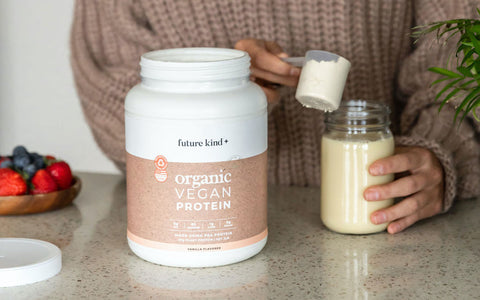
When we developed our organic vanilla pea protein, organic certification wasn’t a marketing decision, it was a baseline requirement. We wanted a protein powder we’d actually take ourselves, which meant starting with the cleanest possible source ingredient and building from there.
Our organic pea protein isolate is grown and processed to organic and non-GMO standards. It’s the only protein source in the formula. To that we add a small amount of stevia leaf extract for natural sweetness and organic vanilla flavor. The result is a short, completely readable ingredient list with 20g of protein per serving, the full amino acid spectrum, and naturally occurring iron.
Every batch is independently tested by a third-party lab and manufactured in a GMP-certified, FDA-regulated US facility. Results are published on our product pages. We also offer a full range of vegan supplements designed around the same principles: clean ingredients, transparent sourcing, third-party testing. If you’re just getting started, our guide on the best plant-based supplements for beginners is a good place to start.
|
Try Future Kind organic protein Organic pea protein isolate. One protein ingredient. 20g protein per serving. Third-party tested. Made in the USA. |
Frequently asked questions
Is organic vegan protein powder worth it?
For a supplement you take daily, yes. Organic certification means the source ingredient was grown without synthetic pesticides and independently verified. Non-GMO certification tells you it hasn’t been genetically modified. Together they give you more confidence about what you’re consuming regularly which matters more for a daily supplement than an occasional food.
What is the best organic plant-based protein powder?
The best option has certified organic and non-GMO source ingredients, uses a single protein source (ideally pea protein isolate), avoids artificial sweeteners and fillers, and provides published third-party lab results. The specific product matters as much as the certification; a short, readable ingredient list is the clearest sign of a genuinely clean formula.
What’s the difference between certified organic and “made with organic ingredients”?
“Certified organic” means the product as a whole has been through the full certification process. “Made with organic ingredients” is a weaker claim; it means some ingredients are organic, but the product itself hasn’t been fully certified. When evaluating labels, look for the certified organic seal, not just organic ingredient callouts.
Is organic pea protein better than regular pea protein?
The amino acid profile and protein content are comparable. The difference is in the source: organic pea protein comes from peas grown without synthetic pesticides and verified by a certifying body. For a protein powder you’re consuming daily, choosing organic means you’re consistently avoiding whatever residual chemicals conventional farming might leave behind in the crop.
Does organic protein powder taste different?
Not inherently, but many people find that clean organic formulas taste better because they’re not trying to mask an inferior protein base with artificial flavorings or excessive sweeteners. A high-quality organic pea protein isolate, lightly sweetened with stevia and organic vanilla, can taste genuinely creamy and satisfying mixed with water or unsweetened plant milk.


Comments (0)
There are no comments for this article. Be the first one to leave a message!