


Plant-based protein shakes have a reputation for being chalky, gritty, or just plain hard to finish. That reputation is mostly the result of poorly made products and bad recipes rather than anything inherent to plant protein itself. Made well, a plant-based protein shake can be genuinely creamy, satisfying, and something you actually look forward to.
This guide covers what plant-based protein shakes actually do, who benefits from them, and how to make ones that taste good, including four recipes to start with today.
What are the benefits of plant-based protein shakes?
A plant-based protein shake does what any protein supplement does: it gives you a concentrated, convenient source of protein without requiring a full meal. The difference is that the protein comes from plant sources rather than animal products like whey or casein.
For people on vegan or vegetarian diets, or anyone trying to eat less meat, protein shakes are one of the most practical ways to hit daily protein targets. You can read more about how many protein shakes a day you actually need, but for most active adults one serving per day is plenty.
The specific benefits depend on the protein source, but a high-quality plant-based shake typically offers:
-
Muscle support and recovery. Protein is the building block of muscle tissue. Consuming adequate protein after exercise supports repair and growth, regardless of whether the source is plant or animal.
-
Appetite management. Protein is more satiating than carbohydrates or fat. A shake mid-morning or after a workout can reduce hunger and make it easier to eat well for the rest of the day.
-
Convenient nutrition. A protein shake takes two minutes to make. For people with busy schedules or unpredictable meal times, it removes the gap between knowing what you need and actually getting it.
-
Iron from pea protein. This is specific to pea-protein-based shakes: pea protein is naturally high in iron, which is a nutrient that is easy to fall short on when eating plant-based. A daily shake contributes meaningfully to iron intake.
-
No dairy, no soy, no common allergens. A clean pea protein shake is free from the allergens that make whey and soy protein problematic for a lot of people.
|
Do you need a protein shake? Not necessarily. It is entirely possible to meet protein needs through food alone, particularly if you know your sources well. See our guide on the best vegan protein sources from food. But for people who exercise regularly, have high protein requirements, or simply find it hard to hit targets through meals, a daily shake is one of the simplest solutions available. |
How to make a plant-based protein shake that actually tastes good
Most bad protein shakes come down to one of three problems: a low-quality protein base, too much liquid that dilutes the flavor, or no supporting ingredients to give the shake body and depth. Here is how to fix all three.
Start with a clean protein powder
The quality of the powder makes more difference to taste than anything else. A good organic pea protein isolate has a mild, slightly earthy flavor that works well with most mix-ins. Avoid powders with artificial sweeteners or flavor enhancers, which often leave a chemical aftertaste. For guidance on choosing one, see our post on what makes a plant-based protein powder actually clean.
Use a plant milk base, not water
Water produces thin, watery shakes. Unsweetened almond milk, oat milk, or flaxseed milk all add creaminess and a small amount of natural sweetness without loading up on sugar. Unsweetened almond milk is a particularly good match for vanilla protein powder.
Add something frozen
Adding frozen bananas or a handful of frozen berries does two things: it thickens the shake and lowers the temperature, which improves texture significantly. Frozen bananas specifically add a natural creamy sweetness that pairs well with vanilla protein.
Include a fat source
A tablespoon of almond butter, a small piece of avocado, or a handful of cashews adds richness and keeps you full for longer. Fat also helps the shake feel like a meal rather than a flavored drink.
Blend properly
Under-blending leaves lumps and a gritty texture. Blend on high for at least 30 to 45 seconds. If your blender is not powerful, add liquid first to help everything incorporate evenly.
Four plant-based protein shake recipes to try
All four recipes below use our organic vanilla pea protein powder. Each provides around 25 to 30g of protein per serving.
|
Classic Vanilla Almond Shake Approx. 28g protein | 380 calories | Ready in 2 minutes Ingredients • 1 scoop organic vanilla pea protein powder • 300ml unsweetened almond milk • 1/2 frozen banana • 1 tbsp almond butter • 2 ice cubes Method 1. Add all ingredients to a blender. 2. Blend on high for 45 seconds until smooth and creamy. 3. Taste and add a small amount of stevia if you prefer it sweeter. 4. Pour and serve immediately. |
|
Berry and Spinach Recovery Shake Approx. 26g protein | 320 calories | Ready in 3 minutes Ingredients • 1 scoop organic vanilla pea protein powder • 280ml unsweetened oat milk • 80g frozen mixed berries • 1 large handful fresh spinach (you will not taste it) • 1 tbsp ground flaxseed • 1 tsp maple syrup (optional) Method 1. Add oat milk and spinach to the blender first. 2. Add protein powder, berries, flaxseed, and maple syrup. 3. Blend on high for 45 to 60 seconds until completely smooth. 4. The berries will color the shake purple, masking the spinach entirely. |
|
Peanut Butter Banana Shake Approx. 30g protein | 420 calories | Ready in 2 minutes Ingredients • 1 scoop organic vanilla pea protein powder • 300ml unsweetened almond milk • 1 frozen banana • 1.5 tbsp natural peanut butter • 1/4 tsp cinnamon • 2 ice cubes Method 1. Add liquid to the blender first. 2. Add all remaining ingredients. 3. Blend on high for 45 seconds. 4. This shake is thick. Add another splash of almond milk if needed to reach your preferred consistency. |
|
Simple Post-Workout Shake Approx. 25g protein | 260 calories | Ready in 2 minutes Ingredients • 1 scoop organic vanilla pea protein powder • 350ml cold water or unsweetened almond milk • 1/2 frozen banana • 2 ice cubes Method 1. Add all ingredients to a shaker bottle or blender. 2. Shake hard for 20 seconds or blend for 30 seconds. 3. Best consumed within 20 minutes of a workout. |
Tips for building your own recipes
Once you are comfortable with the basics, building your own shake recipes is straightforward. Here is a simple framework:
-
Base liquid (250 to 350ml). Unsweetened almond milk, oat milk, flaxseed milk, or water.
-
Protein source (1 scoop). Organic vanilla or chocolate pea protein powder.
-
Frozen fruit (50 to 100g). Banana, berries, mango, or pineapple for texture and natural sweetness.
-
Fat source (1 tbsp). Almond butter, peanut butter, tahini, hemp seeds, or half an avocado.
-
Extras (optional). Ground flaxseed, chia seeds, cacao powder, cinnamon, or a handful of spinach or kale.
|
Shake tip If your shake is too thick, add liquid in small amounts and blend again. If it is too thin, add more frozen fruit or a tablespoon of oats before blending. For a higher-calorie shake add a second tablespoon of nut butter or a quarter cup of rolled oats. For a lighter shake, skip the fat source and use water as your base. |
The protein powder that works in all of them
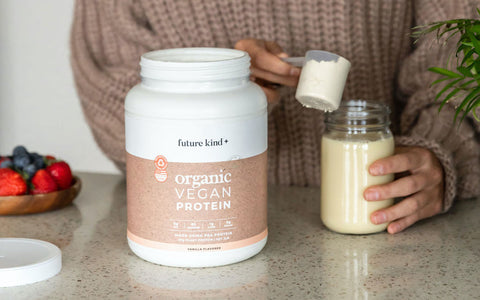
All the recipes above are designed around our organic vanilla pea protein powder, which uses a single ingredient: organic pea protein isolate. It is lightly sweetened with stevia leaf extract and flavored with organic vanilla, which means it works well both on its own and as a base for more complex recipes.
It is manufactured in a GMP-certified, FDA-regulated US facility, independently third-party tested for potency and purity, and provides 20g of protein per serving with no fillers, no artificial sweeteners, and nothing that needs explaining. You can also explore our full vegan protein range if you would prefer a chocolate version.
|
Try Future Kind protein Organic pea protein isolate. 20g protein per serving. Third-party tested. Made in the USA. Works in every recipe above. |
Frequently asked questions
Are plant-based protein shakes as good as whey?
For most people, yes. High-quality plant-based protein powders, particularly those built on pea protein isolate, provide a complete amino acid profile and comparable muscle-building support to whey. The main differences are that plant proteins have slightly lower bioavailability, which is easily addressed by consuming enough total protein daily, and they are free from dairy, which is better tolerated by many people.
When is the best time to have a plant-based protein shake?
Any time works. Post-workout is popular because muscles are receptive to protein in the window after exercise. But protein is valuable throughout the day. Having a shake at breakfast or mid-morning is just as effective for daily protein intake and is a useful way to stay full between meals.
Can you make plant-based protein shakes without a blender?
Yes. A shaker bottle works well for simple shakes using protein powder, liquid, and no frozen fruit. Add liquid first, then powder, then seal and shake vigorously for 20 to 30 seconds. For shakes with frozen fruit or nut butter, a blender will give a much smoother result.
How much protein should a plant-based shake have?
Most adults benefit from 20 to 30g of protein per shake. One scoop of a quality pea protein powder provides around 20g, which is a solid foundation. Adding nut butter, hemp seeds, or oat milk to your recipe will bring the total closer to 25 to 30g, which is the upper range of what muscle tissue can effectively use from a single serving.
Do plant-based protein shakes help with weight loss?
Protein supports weight management by increasing satiety and helping preserve lean muscle mass during a calorie deficit. A plant-based protein shake is a useful tool in that context, but the total quality of the diet matters more than any single supplement.


Comments (0)
There are no comments for this article. Be the first one to leave a message!