


Soy protein is one of the most common ingredients in vegan supplements. It is affordable, widely available, and has a complete amino acid profile, which makes it an easy choice for manufacturers trying to keep costs down. But a growing number of people on plant-based diets are actively looking to avoid it, and for good reason.
Here is why soy is worth thinking carefully about, what the best alternatives look like, and how to find a soy-free vegan protein powder that actually performs well.
Why so many people avoid soy protein
The case against soy protein is not that it is inherently dangerous. For most people, moderate soy consumption is perfectly fine. The issue is more nuanced than that, and it shows up in a few different ways.
It is one of the most common allergens
Soy is one of the nine major food allergens recognised by the FDA. For people with a soy allergy or intolerance, even small amounts in a supplement can trigger a reaction. Because protein powders are often consumed daily, the cumulative exposure is higher than it would be from occasional food sources. For anyone with any sensitivity to soy, protein powder is one of the first places to check.
Most commercial soy comes from GMO crops
The vast majority of soy produced globally, particularly in the United States, comes from genetically modified seeds. For people choosing organic or non-GMO products, conventional soy protein is immediately out of the picture. Certified organic soy protein exists, but it is less common and more expensive, which means many products marketed as natural still use non-organic GMO soy.
It is more heavily processed than some alternatives
Producing soy protein isolate involves significant chemical processing, including hexane extraction in some cases. Hexane is a petroleum-derived solvent used to separate the protein from the rest of the soybean. Residual levels in the finished product are generally considered low, but for people prioritizing minimal processing, it is another reason to look elsewhere.
Hormonal concerns, in context
Soy contains isoflavones, which are plant compounds that can weakly mimic estrogen in the body. The research on whether typical dietary levels of soy consumption meaningfully affect hormone levels in healthy adults is mixed, and most evidence suggests the effect is small. However, for people who are consuming soy protein daily in supplement quantities, it is a reasonable concern to be aware of, particularly for those already monitoring hormone-related conditions.
|
Worth noting None of these concerns make soy protein dangerous for most people. But for anyone with a soy allergy, a preference for minimal processing, a commitment to non-GMO ingredients, or any personal reason to reduce soy intake, a soy-free alternative is simply the cleaner option. |
What to use instead: pea protein
Pea protein isolate, derived from yellow split peas, has become the most widely used soy-free plant protein source for good reasons. It addresses most of the concerns above while delivering comparable or better performance.
Naturally soy-free and allergen-friendly
Pea protein contains none of the major allergens. It is free from soy, gluten, dairy, and tree nuts, which makes it one of the most broadly tolerated plant protein sources available. For anyone managing multiple food sensitivities, this matters.
Complete amino acid profile
Like soy, pea protein contains all nine essential amino acids, making it a complete protein source. It is particularly high in branched-chain amino acids, especially leucine, which is important for muscle protein synthesis. The bioavailability is slightly lower than soy, but the difference is small and easily compensated for by consuming adequate total protein across the day.
High in iron
One meaningful advantage pea protein has over soy is its natural iron content. Pea protein is a genuinely useful source of iron, which is a nutrient that people on plant-based diets often fall short of. Getting a contribution toward daily iron requirements from your protein powder is a practical benefit, particularly for women and people with higher physical activity levels.
Minimal processing
Producing pea protein isolate does not require hexane extraction. The process involves water-based separation, which is considerably cleaner from a manufacturing standpoint. For people who care about how their supplements are made, not just what is in them, this is a meaningful distinction.
Good digestibility
Pea protein is well-tolerated by most people, including those who experience bloating or digestive discomfort from other plant proteins. It does not share the digestive issues sometimes associated with high-fiber plant sources and does not require the processing steps that make some proteins harder to absorb.
|
Pea protein vs soy protein at a glance ✓ Soy-free and allergen-friendly ✓ Less GMO concerns with organic certified ✓ No hexane processing required ✓ Complete amino acid profile ✓ Naturally high in iron ✓ Well-tolerated digestively |
What to look for in a soy-free protein powder
Being soy-free is a starting point, not a guarantee of quality. Here is what else to check when evaluating a soy-free vegan protein powder.
-
Check the full ingredient list, not just the front label. Some products highlight being soy-free while still containing other additives, artificial sweeteners, or fillers worth avoiding. A clean soy-free powder should have a short, readable ingredient list.
-
Look for organic and non-GMO certification. If avoiding GMO ingredients is part of your reason for going soy-free, organic certification on the protein source is the only way to verify that the alternative is actually non-GMO. Without it, you are relying on the manufacturer's word.
-
Check for natural sweeteners. The same sweetener concerns that apply to any protein powder generally apply here. Sucralose and ace-K are worth avoiding regardless of whether the protein base is soy-free or not.
For a full breakdown of what to look for on any protein powder label, see our guide on what makes a plant-based protein powder actually clean. And if organic certification specifically matters to you, our organic vegan protein powder guide covers that in detail.
Why Future Kind is soy-free
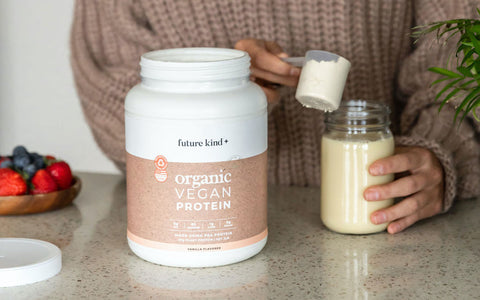
When we developed our organic vanilla pea protein powder, choosing a soy-free formula was not a compromise, it was the obvious starting point. Organic pea protein isolate is a better base ingredient on almost every measure that matters to us: cleaner processing, no GMO concerns, broader allergen compatibility, and naturally occurring iron.
The formula has four ingredients: organic pea protein isolate, stevia leaf extract, organic vanilla flavor, and organic guar gum. It is certified organic, non-GMO, soy-free, gluten-free, and dairy-free. Every batch is independently tested by a third-party lab and manufactured in a GMP-certified, FDA-regulated US facility.
If you are ready to put it to use, our plant-based protein shake recipes give you a range of options you can use for a simple two-minute post-workout shake or a more involved breakfast smoothie.
|
Try Future Kind soy-free protein Organic pea protein isolate. Soy-free, gluten-free, dairy-free. 20g protein per serving. Third-party tested. Made in the USA. |
Frequently asked questions
Is soy-free protein powder better?
For most people, it depends on why they are avoiding soy. If you have a soy allergy or intolerance, soy-free is essential rather than preferable. If you are avoiding GMO ingredients, organic certified soy-free alternatives like pea protein are the more consistent choice. If your primary concern is minimal processing, pea protein is again the stronger option. For people with no specific concerns about soy, both can work well.
What plant protein does not have soy?
Pea protein, hemp protein, brown rice protein, and pumpkin seed protein are all common soy-free plant protein sources. Of these, organic pea protein isolate is generally considered the best option for protein powder because of its complete amino acid profile, good digestibility, mild flavor, and clean processing requirements.
Is pea protein soy-free?
Yes. Pea protein is derived from yellow split peas and contains no soy. It is naturally free from all of the major allergens, including soy, gluten, and dairy. For anyone with a soy allergy or a preference to avoid soy, organic pea protein isolate is one of the most reliable and well-rounded alternatives available.
Can you build muscle with soy-free protein powder?
Yes. Pea protein contains all nine essential amino acids and is high in branched-chain amino acids, particularly leucine, which plays a central role in muscle protein synthesis. Research comparing pea protein to whey and soy protein for muscle building outcomes shows comparable results when total protein intake is adequate. Being soy-free does not compromise the protein's effectiveness for muscle support.
How do I know if a protein powder is truly soy-free?
Check the ingredient list for any form of soy: soy protein, soy lecithin, soya, and hydrolysed soy protein are common names to look for. For people with a soy allergy, also check for cross-contamination warnings in the allergen statement.



Comments (0)
There are no comments for this article. Be the first one to leave a message!