


Not all plant-based protein powders are as wholesome as they look. The label might say “natural” or “plant-based,” but flip it over and you'll often find a long list of ingredients you'd struggle to pronounce with artificial sweeteners, fillers, and synthetic additives.
So what does “clean” actually mean? And how do you know if what you're buying qualifies? If you'd rather get protein from food first, start with the best vegan protein sources. But if you’re using a powder, here’s what to look for.
What to watch out for on the label
-
Overly long ingredient lists. If a powder has 15+ ingredients, most are likely fillers, binders, or flavor-masking agents, not nutrition.
-
Artificial sweeteners. Sucralose, ace-K, and aspartame are common because they’re cheap. They’re not natural and many people prefer to avoid them.
-
“Natural flavors” as a catch-all. This term is broad and often covers heavily processed extracts used to disguise low-quality protein.
-
Soy from GMO crops. Most commercial soy protein comes from genetically modified sources. Worth checking if that matters to you.
|
Quick check Count the ingredients before you buy. If you can't identify what most of them are, or why they’d be in a protein powder, that’s a signal worth paying attention to. |
What a clean protein powder looks like
A clean protein powder has a short, legible ingredient list built on a single high-quality source. Here’s the full checklist:
-
One protein source. Organic pea protein isolate is the gold standard, soy-free, gluten-free, high in BCAAs, and naturally rich in iron (a common gap on plant-based diets).
-
Organic & non-GMO certified. Certification means the crop was grown without synthetic pesticides and independently verified, not just claimed.
-
Natural sweetener only. Stevia leaf extract is the cleanest option: plant-derived, no sugar, no synthetic chemistry.
-
Third-party tested with published results. Any brand can claim purity. Published Certificates of Analysis are the only way to verify it. See our quality and testing standards.
-
GMP-certified, FDA-regulated facility. Federal manufacturing standards for supplements. Non-negotiable for something you consume daily.
|
The clean protein checklist ✓ Single organic protein source (ideally pea protein isolate) ✓ Organic & non-GMO certified | ✓ No artificial sweeteners ✓ Natural sweetener only (stevia) | ✓ No fillers or binders ✓ Third-party tested with published results | ✓ GMP-certified facility |
How Future Kind does it
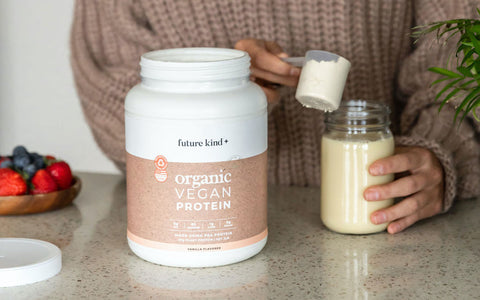
We built our organic vanilla pea protein around one question: what’s the minimum number of ingredients needed to make something genuinely effective and completely clean?
The answer was essentially one: organic pea protein isolate. We added stevia leaf extract for natural sweetness and organic vanilla flavor. That’s it. No fillers (but Guar Gum). No artificial sweeteners. Nothing that needs explaining.
Every batch is manufactured in a GMP-certified, FDA-regulated US facility and independently tested for potency, heavy metals, and pathogens, results published on the product page. The result: 20g of clean organic protein per serving, full amino acid spectrum, naturally occurring iron, and nothing else.
Not sure how much protein you actually need? See our guide on how many protein shakes a day is right for you.
|
Try Future Kind protein One ingredient. 20g of organic pea protein. Third-party tested. Made in the USA. |
Frequently asked questions
What is the cleanest plant-based protein powder?
The cleanest options have the fewest ingredients, use organic and non-GMO certified sources, avoid artificial sweeteners, and are independently third-party tested with published Certificates of Analysis. Organic pea protein isolate is widely considered the gold standard base ingredient.
Is plant-based protein powder good for you?
Yes, especially for people on vegan diets who struggle to hit protein targets through food alone. A quality plant-based powder provides complete amino acids, supports muscle recovery, and in the case of pea protein, also supplies iron, a nutrient commonly low on plant-based diets. Quality of ingredients matters more than just the “plant-based” label on the front.
What should I avoid in a plant-based protein powder?
Artificial sweeteners (sucralose, ace-K, aspartame), proprietary blends that hide actual protein content, soy from non-organic GMO sources, unnecessary fillers, and any brand that won’t publish its third-party lab results.
Is pea protein a complete protein?
Yes. Pea protein contains all nine essential amino acids and is particularly high in BCAAs. It is slightly lower in methionine than some animal proteins, but this is easily covered through a varied diet.
Does organic certification matter for protein powder?
Yes, especially for a supplement you consume daily. Organic certification means the source crop was grown without synthetic pesticides and verified by a third-party body. For protein powder, it’s one of the most meaningful quality signals on the label.


Comments (0)
There are no comments for this article. Be the first one to leave a message!