


Pick up any vegan protein powder and turn it over. What you find on that label can range from three ingredients to thirty. Some of those ingredients are genuinely useful. Others are there to cut costs, mask problems, or make a mediocre product seem more complete than it is.
This guide breaks down every common ingredient category in vegan protein powder, explains what each one does and why it is or is not there, and helps you read a label quickly and confidently. For a broader look at what separates clean formulas from the rest, see our guide on what makes a plant-based protein powder actually clean.
The protein source: what to look for first
The protein source is the most important ingredient on the label. Everything else is secondary. Here are the most common plant protein sources and what to know about each.
|
Protein source |
What to know |
|
Pea protein isolate |
The gold standard for clean plant protein. Complete amino acid profile, high in BCAAs, naturally rich in iron, soy-free, and well-tolerated. Look for organic and non-GMO certified. |
|
Brown rice protein |
Common and affordable. Incomplete amino acid profile on its own (low in lysine), grainy texture, earthier flavor. Often blended with pea protein to fill gaps. |
|
Soy protein isolate |
Complete amino acid profile but most commercial soy comes from GMO crops and involves more processing. One of the nine major allergens. See our soy-free guide for more. |
|
Hemp protein |
Contains beneficial omega-3s and fiber but is lower in protein per gram than isolates. Has a distinct nutty flavor and is not a complete protein without supplementation. |
|
Pumpkin seed protein |
Emerging option, soy-free and allergen-friendly. Good amino acid profile but lower protein density than pea or rice. Less common and typically more expensive. |
|
Protein blends |
Multiple sources combined, often to reduce cost or hit an amino acid target without using premium ingredients. Not inherently bad, but makes it harder to evaluate each source individually. |
Sweeteners: the biggest split on the market
The sweetener choice in a protein powder tells you a lot about how the manufacturer thinks about the formula. There is a clear divide between natural and artificial options.
Natural sweeteners
Stevia leaf extract is the cleanest option. It is derived directly from the leaves of the stevia plant, provides sweetness with no sugar or calories, and does not leave an aftertaste when used in the right quantity. Monk fruit extract is a less common but similarly clean alternative. Both are what to look for in an all-natural protein powder.
Artificial sweeteners
Sucralose, acesulfame potassium (ace-K), and aspartame are the three most common artificial sweeteners in protein powder. They are used because they are extremely sweet at tiny quantities, which keeps costs down. All three are considered safe by regulatory agencies but are not natural ingredients, and sucralose and ace-K in particular are associated with the metallic aftertaste many people notice. If avoiding artificial additives matters to you, these are the ones to watch for. For more on how sweetener choice affects taste, see our post on
why most vegan protein powders taste chalky.
Added sugars
Some protein powders, particularly those marketed as meal replacements or mass gainers, contain added sugar or coconut sugar. This is not automatically a problem, but it is worth knowing about if you are watching sugar intake. Check the nutrition panel for total sugars alongside the ingredient list.
Flavorings: natural versus artificial
Most flavored protein powders list either natural flavors, artificial flavors, or specific flavor ingredients like organic vanilla flavor or cocoa powder.
Organic vanilla flavor and natural cocoa or cacao are among the cleanest options. They come from recognizable plant sources, behave predictably in a formula, and do not need to be supported by flavor enhancers. Natural flavors as a general category is a broader term and covers a wide range of processed flavor compounds. It is not a red flag in itself, but it is worth noting that it covers more ground than the name suggests. Artificial flavors are the furthest from the source and are generally the first thing worth avoiding in an otherwise clean product.
Additives and fillers: what they are doing there
This is where the ingredient list tends to grow. Some of these additives are genuinely functional. Others are there primarily to compensate for a weaker protein base or to reduce manufacturing costs. Some of these ingredients are used to improve texture or mixability in small amounts, which can be reasonable in an otherwise simple formula. The key difference is whether an ingredient serves a clear functional role or is there to bulk out a weaker product.
|
Ingredient |
Why it is there and whether to be concerned |
|
Maltodextrin |
A cheap carbohydrate filler that adds bulk and mouthfeel. Has a high glycaemic index. Often present in lower-quality formulas. Worth avoiding if you are not looking for added carbs. |
|
Sunflower lecithin |
An emulsifier that helps the powder mix more smoothly with liquid. Derived from sunflower seeds rather than soy. Generally considered a reasonable functional additive in small quantities. |
|
Soy lecithin |
Same function as sunflower lecithin but derived from soy. Relevant to check if you are avoiding soy. Often listed separately from soy protein, so easy to miss. |
|
Xanthan gum |
A thickener and stabiliser. Used to improve texture and mouthfeel. Considered safe but often unnecessary in a high-quality formula that does not need texture compensation. |
|
Guar gum |
A plant-derived thickener and stabilizer used to improve texture and mixability. In small amounts, it is generally considered a reasonable functional ingredient rather than a filler. It can be helpful in otherwise simple formulas, though some people with sensitive digestion may prefer to avoid gums altogether. |
|
Inulin |
A prebiotic fiber added for gut health marketing claims or to improve mixability. Can cause bloating at higher doses in people sensitive to fermentable fibers. |
|
Digestive enzymes |
Sometimes added to improve protein absorption or reduce digestive discomfort. Not necessary if the protein base is already easy to digest, as pea protein typically is. |
|
MCT oil powder |
Medium-chain triglycerides added as a fat source. More relevant in keto-focused products. Adds calories and some creaminess. Functional if intentional, unnecessary otherwise. |
|
Salt |
Small amounts are sometimes added to suppress bitterness in lower-quality protein bases. If salt appears near the top of the ingredient list, that is a signal the base needed help. |
Vitamins and minerals: when they belong and when they do not
Some protein powders include a range of added vitamins and minerals, positioning them closer to a meal replacement than a straight protein supplement. This is not inherently problematic, but it changes what the product is.
If you are already taking a dedicated multivitamin or individual supplements, a protein powder with its own micronutrient stack can complicate your intake and make it harder to track what you are actually getting from each nutrient. Pea protein already contains naturally occurring iron, which is a genuine nutritional benefit. Added synthetic vitamins on top of that are worth evaluating based on whether you actually need them.
For people on plant-based diets, naturally occurring nutrients in the protein source can be a real advantage. Pea protein, for example, naturally contains iron. That is different from a formula heavily fortified with a long list of added vitamins and minerals. If you are trying to address a specific nutrient gap, a targeted supplement can offer more precise dosing, while a clean protein powder can still provide nutritional value from the base ingredient itself.
What a clean, all-natural label looks like
After going through every ingredient category, the pattern becomes clear. A clean, all-natural vegan protein powder has a very short label because it does not need ingredients to compensate for anything.
What you should see on a clean label
✓ One primary protein source, ideally organic pea protein isolate
✓ A natural sweetener such as stevia or monk fruit
✓ A specific, recognisable flavor such as organic vanilla flavor or cocoa
✓ Only minimal functional ingredients, used for a clear purpose
What to treat as a yellow flag
-
More than five or six ingredients total, unless each one has a clear functional role
-
Artificial sweeteners: sucralose, ace-K, aspartame
-
Salt appearing early in the list
-
Maltodextrin or other cheap carbohydrate fillers
-
Multiple gums, emulsifiers, and additives used to compensate for a weaker base
-
No third-party test results available from the brand
How Future Kind reads on this checklist
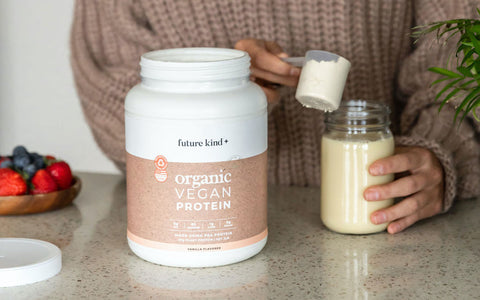
Our organic vanilla pea protein powder has four ingredients: organic pea protein isolate, organic stevia leaf extract, organic guar gum, and organic vanilla flavor. There are no fillers,no artificial sweeteners, and no salt. The protein source is certified organic and non-GMO. It is soy-free and gluten-free.
Every batch is independently tested by a third-party lab for potency, heavy metals, and pathogens. The results are published on our product pages for anyone to review. For more on why we made the specific choices we did around soy and allergens, see our soy-free vegan protein guide.
|
Try Future Kind organic protein Four ingredients. Organic pea protein isolate, organic stevia, organic guar gum, organic vanilla flavor. 20g protein per serving. Third-party tested. Made in the USA. |
Frequently asked questions
What ingredients should be in vegan protein powder?
A clean vegan protein powder should start with a high-quality plant protein source, ideally organic pea protein isolate. From there, the best formulas keep the rest simple: a natural sweetener such as stevia or monk fruit, a recognisable flavor source like vanilla or cocoa, and only minimal functional ingredients when they genuinely improve texture or mixability. Every ingredient should have a clear purpose.
What additives should I avoid in protein powder?
The main ones to watch for are artificial sweeteners (sucralose, acesulfame potassium, aspartame), maltodextrin used as a filler, salt added to suppress bitterness, and soy lecithin if you are avoiding soy. A long ingredient list is often the first indicator that some of these are present, even if they appear near the bottom.
Is all-natural protein powder better?
For most people who care about what they are putting into their body regularly, yes. Natural ingredients come from recognisable sources, require less processing, and are less likely to cause the aftertaste or digestive issues some people experience with artificial additives. The practical difference on performance metrics like muscle protein synthesis is small, but the difference in what you are consuming daily is meaningful.
What is the difference between protein concentrate and protein isolate?
A protein concentrate typically contains 60 to 80 percent protein by weight, with the remainder being carbohydrates and fat from the original source. A protein isolate has been further processed to remove most of those additional components, typically resulting in 90 percent or more protein by weight. Isolates are generally considered the cleaner option for protein powders because they deliver more protein per gram with fewer incidental macronutrients.
Why do some vegan protein powders have so many ingredients?
Typically because the protein base is not strong enough to stand alone. Weaker or lower-grade protein sources need flavor masking, texture improvement, and sweetener support to become palatable. Each of those problems introduces new ingredients. A high-quality protein source processed well, sweetened with stevia, and flavored simply does not need the same level of support.

Comments (0)
There are no comments for this article. Be the first one to leave a message!