


Choosing the Right Multivitamin from Future Kind
Walk into any supplement aisle and you’ll find dozens of multivitamins claiming to be “complete” or “plant-based.” But flip them over, and the ingredient lists tell very different stories. Some use cheap, poorly absorbed nutrient forms. Others skip the vitamins vegans need most. A few don’t even qualify as truly vegan.
Understanding vegan multivitamin ingredients isn’t about memorizing chemistry, it's about knowing what separates a supplement that delivers real benefits from one your body barely uses. Here’s what the science says you should look for.
Why Nutrient Form Matters More Than You Think
Every vitamin and mineral exists in multiple chemical forms, and your body doesn’t treat them equally. Some forms are “bioavailable”, meaning your body can absorb and use them efficiently, while others need to be converted first, and that conversion process is often incomplete.
For example, there’s a significant difference between cyanocobalamin and methylcobalamin when it comes to B12. Cyanocobalamin is synthetic and requires your body to strip away a cyanide molecule before converting it into a usable form. Methylcobalamin is already bioactive and ready to go. Both “count” as B12 on a label, but one is doing far more work for you. For a full breakdown, read our guide on cyanocobalamin vs. methylcobalamin.
The same principle applies across the board. Vitamin D3 (cholecalciferol) is more effective at raising blood levels than D2 (ergocalciferol). Folate as methylfolate is superior to synthetic folic acid, especially for the estimated 40% of people with MTHFR gene variations who struggle to convert folic acid at all. A good vegan multivitamin uses the bioactive forms of each nutrient, not the cheapest ones available.
Important Nutrients Some Vegans May Need Separately
Vitamin B12 (as methylcobalamin or adenosylcobalamin). This is non-negotiable. B12 doesn’t exist in plant foods, and deficiency causes irreversible nerve damage over time. A vegan multivitamin without B12 is incomplete, full stop. Learn more about the different forms in our adenosylcobalamin B12 guide.
Vitamin D3 (from lichen). Most vitamin D3 on the market comes from lanolin, a waxy substance extracted from sheep’s wool. Truly vegan D3 is sourced from lichen, a symbiotic organism that produces cholecalciferol naturally. This is what you should see on the label of any vegan vitamin D3.
Omega-3 DHA & EPA (from algae). Fish don’t produce omega-3s; they accumulate them from eating algae. Algae-derived vegan omega-3 goes straight to the source, delivering DHA and EPA without the heavy metals, PCBs, and environmental destruction associated with fish oil.
Iron (as ferrous bisglycinate). Not all iron supplements are created equal. Ferrous bisglycinate is a chelated form that’s gentler on the stomach and significantly better absorbed than ferrous sulfate, the cheap form found in most budget multivitamins. Pairing it with vitamin C further enhances uptake, which is why a combined iron and vitamin C formula is ideal.
Iodine. Often overlooked but critically important for thyroid function. Without dairy or seafood in your diet, iodine is one of the nutrients most likely to be lacking. A quality vegan multivitamin includes it; many don’t. Read more about the best iodine sources for vegans.
Zinc (as zinc picolinate or bisglycinate). Zinc supports immune function, wound healing, and hormone production. Because phytates in plant foods can reduce zinc absorption, many vegans benefit from forms chosen for better bioavailability. This is why zinc is included in more comprehensive formulas like our Foundations Vegan Multivitamin, and why we also offer a dedicated vegan zinc supplement for more targeted support.Our vegan zinc supplement uses a highly absorbable form for exactly this reason.
Red Flags on a Multivitamin Label
Knowing what to avoid is just as important as knowing what to look for. Watch out for these warning signs when evaluating vegan multivitamin ingredients:
Proprietary blends. If a label uses a proprietary blend to hide the exact amounts of essential vitamins, minerals, or functional ingredients, that is a reason to look more closely. Transparency matters: you should know how much of each key nutrient you are getting. Proprietary blends are less concerning when they are used for non-essential add-ons, such as fruit and vegetable ingredients, as long as the main vitamin and mineral dosages are clearly disclosed.
Folic acid instead of folate. Synthetic folic acid is cheaper to manufacture, but a significant percentage of the population can’t convert it efficiently. Methylfolate (5-MTHF) is the form your body uses directly.
Magnesium oxide. The form of magnesium can affect both absorption and digestive tolerance, so it is worth checking the label rather than assuming all magnesium is the same. Magnesium oxide is common in multivitamins because it is compact and practical in formula design, while forms like citrate, glycinate, or bisglycinate are often chosen in standalone magnesium supplements for different absorption or tolerance considerations. The key is to evaluate the full formula in context rather than judging a product on a single ingredient alone.
No third-party testing. It is worth checking whether a supplement is manufactured in GMP-certified facilities and whether it undergoes third-party testing for purity and safety. Third-party testing can help confirm that a product is screened for contaminants such as heavy metals or microbes, while GMP standards help ensure consistency and quality in manufacturing. Together, these are useful trust signals when evaluating a supplement brand.
Essential vs. Complete: Choosing the Right Multivitamin
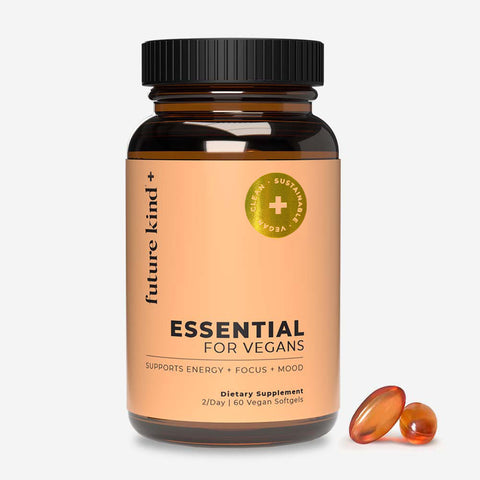
Not everyone needs the same level of coverage. If you eat a varied whole-food vegan diet, you may only need the nutrients that plant foods genuinely can’t provide. Our Essential Vegan Multivitamin focuses on exactly that: B12, D3, and omega-3 DHA/EPA, the three nutrients every vegan is at risk of missing, combined in one daily supplement.
If your diet is less consistent, you’re in a demanding life stage like pregnancy, or you simply want broader insurance, the Complete Vegan Multivitamin adds, zinc,selenium, calcium, and more for full-spectrum coverage. For those planning a family, a dedicated vegan prenatal vitamin ensures both parent and baby get the right nutrients at the right doses.
How to Read a Multivitamin Label Like a Pro
Next time you pick up a vegan multivitamin, run through this quick checklist. First, check the nutrient forms: are they forms chosen for strong bioavailability, such as methylcobalamin, cholecalciferol, or methylfolate, or more standard forms commonly used in conventional formulas? Second, look at the dosages and compare them to recommended daily values so you understand what the product is designed to provide. Third, scan the “other ingredients” section to see how simple or complex the formula is, and note any fillers, colorings, or animal-derived ingredients if those matter to you. Finally, look for trust signals such as GMP-certified manufacturing and third-party testing for purity and safety.
Curious how blood work can reveal whether your multivitamin is doing its job? Our vegan blood test tips guide walks you through exactly what to test and how to interpret the results.
Choose a Multivitamin Backed by Science
The best vegan multivitamin isn’t the one with the longest ingredient list, it's the one that uses the right forms, at the right doses, with full transparency about what’s inside. That’s the standard every supplement should meet.
Explore the Future Kind Essential Vegan Multivitamin or our Foundations Multivitamin, formulated with bioactive ingredients, third-party tested, and designed specifically for plant-based nutrition. Browse the full range of best vegan supplements to build a routine that works for your body.
FDA & Medical Disclaimer
This article is for informational purposes only and does not constitute medical advice. These statements have not been evaluated by the Food and Drug Administration. Dietary supplements are not intended to diagnose, treat, cure, or prevent any disease. Always consult a qualified healthcare professional before starting any supplement.



Comments (0)
There are no comments for this article. Be the first one to leave a message!