


The vegan supplement market has exploded in recent years. That’s great news for plant-based consumers, but it also means there are more low-quality products than ever competing for your attention. Slick packaging and green buzzwords can make almost any brand look trustworthy at first glance.
So how do you actually find the best vegan supplement brands worth your money? It comes down to a handful of non-negotiable quality markers that separate the real players from the ones riding the trend. Here’s what to look for and what to avoid.
1. Make Sure It’s Actually Vegan
This sounds obvious, but “plant-based” labeling is not regulated the same way “certified vegan” is. Many mainstream supplement brands market products as natural or plant-friendly while still using gelatin capsules, lanolin-derived vitamin D, carmine coloring, or magnesium stearate sourced from animal fats.
A trustworthy vegan supplement brand will clearly state that every ingredient and every component of the product (including the capsule or gummy base) is free from animal derivatives. Look for third-party vegan certification or brands that specialize exclusively in plant-based formulas. For a surprising look at what hides in common supplements, read our post on 12 supplements derived from animals.
2. Check the Nutrient Forms, Not Just the Names
Two brands can both list “Vitamin B12” on their labels and deliver wildly different results. One might use methylcobalamin (a bioactive form your body puts to work immediately), while the other uses cyanocobalamin (a synthetic form that requires conversion and contains a small cyanide molecule your body has to remove first).
The same goes for nearly every nutrient. Vitamin D3 from lichen is superior to D2 from mushrooms. Methylfolate outperforms synthetic folic acid. Chelated minerals like iron bisglycinate absorb far better than cheap oxides and sulfates. The best vegan supplement brands use bioavailable forms across the board because they prioritize what your body can actually use, not what’s cheapest to manufacture. Our cyanocobalamin vs. methylcobalamin guide breaks down why this distinction matters so much.
3. Demand Third-Party Testing
Supplements are not regulated the same way pharmaceuticals are. The FDA does not approve supplements before they hit shelves, which means brands are essentially on the honor system when it comes to what’s actually inside each bottle. Independent lab testing is the only way to verify that what’s on the label matches what’s in the product.
Look for brands that publish certificates of analysis (COAs) and submit their products to accredited third-party labs for purity, potency, and contaminant testing. If a brand doesn’t mention testing anywhere on their website or packaging, treat that as a red flag. Transparency isn’t optional when it comes to something you put in your body every day.
4. Look at Dosages, Not Just Ingredient Lists
Some brands include a long list of vitamins and minerals to make their label look impressive, but the actual dosages are so low they won’t make a meaningful difference. This is especially common with proprietary blends, where brands list a cocktail of ingredients under a single combined weight without disclosing how much of each nutrient you’re getting.
A quality brand lists every nutrient individually with its exact dose. Compare those doses to recommended daily values and look for products that deliver clinically meaningful amounts, not token sprinkles designed to pad the label.
5. Consider Sustainability and Ethics
If you’re vegan, chances are you care about more than just what goes into your body. The best vegan supplement brands align with the broader values that drive plant-based living: environmental responsibility, ethical sourcing, and minimal waste.
Look for brands that use recyclable or compostable packaging, source ingredients sustainably (algae-based omega-3 instead of fish oil, lichen-based D3 instead of lanolin), and operate with genuine transparency about their supply chain. Some brands also give back through animal welfare initiatives or environmental partnerships, which is a meaningful differentiator when the products themselves are comparable.
Red Flags to Watch For
Knowing what to avoid can save you just as much as knowing what to look for. Be cautious of brands that rely on proprietary blends to hide dosages, use vague terms like “natural” or “plant-powered” without specific certifications, don’t mention third-party testing anywhere, list cheap nutrient forms like cyanocobalamin, folic acid, or magnesium oxide, or make exaggerated health claims that sound too good to be true.
A trustworthy brand doesn’t need to overpromise. It lets ingredient quality, transparent labeling, and verified testing do the talking.
What Sets Future Kind Apart
Future Kind was built from the ground up for vegans, not retrofitted from a conventional supplement line. Every product uses bioavailable nutrient forms, is third-party tested with publicly available certificates of analysis, and is formulated based on the specific nutritional gaps that plant-based diets create.
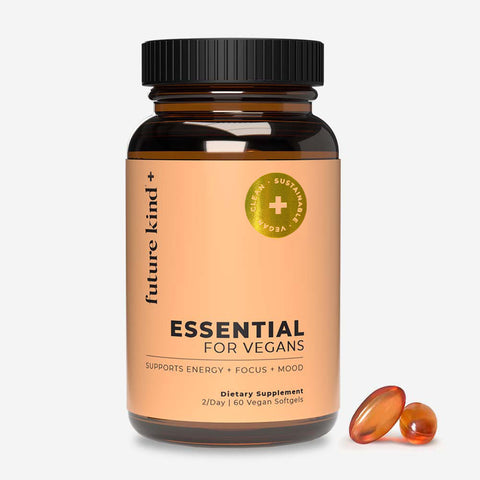
The Essential Vegan Multivitamin focuses on the three nutrients every vegan needs most: B12, D3, and omega-3. The Complete Vegan Multivitamin expands that coverage with iron, zinc, iodine, calcium, and more. And targeted products like Vegan Omega-3, Vegan Vitamin D3, and Iron & Vitamin C let you customize your routine for your exact needs.
Curious what real customers think? Visit our reviews page to see why thousands of vegans trust Future Kind for their daily nutrition.
Find a Brand You Can Trust
Choosing the right vegan supplement brand is one of the most impactful health decisions you can make. Look for bioavailable ingredients, transparent dosages, third-party testing, and values that match your own. Skip the flashy marketing and focus on what’s actually inside the bottle.
Browse the full collection of best vegan supplements from Future Kind and see the difference that quality, transparency, and purpose-built vegan formulation can make.
FDA & Medical Disclaimer
This article is for informational purposes only and does not constitute medical advice. These statements have not been evaluated by the Food and Drug Administration. Dietary supplements are not intended to diagnose, treat, cure, or prevent any disease. Always consult a qualified healthcare professional before starting any supplement.



Comments (0)
There are no comments for this article. Be the first one to leave a message!